PARISH HISTORY
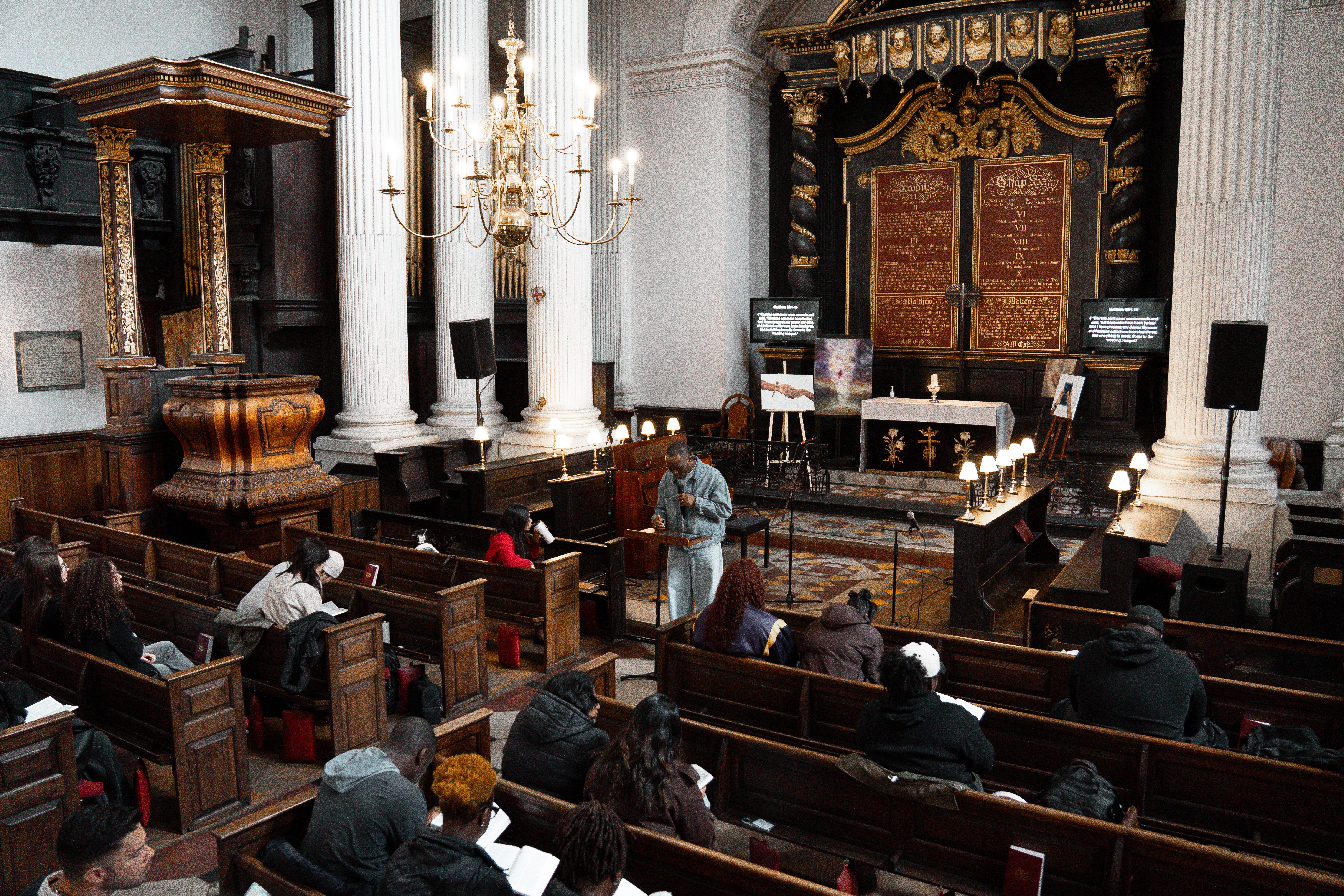
Embassy of amazing grace
Lombard Street has long been known as the banking street of London and for centuries hosted the headquarters of many historic banking institutions. This strategic position at the intersection of trade has given St Mary Woolnoth and St Edmund the King, the churches in Lombard Street, a platform to speak of values, practices that are both above markets but also very much inherent to markets that brings fairness and flourishing to people. These universal laws of business, as the fund manager Sir John Templeton called them, are founded on God’s principles in the Holy Bible and much of the development of the City of London is founded on those principles. For example, the motto of the City, ‘my word is my bond’, was originally a Quaker teaching about trust and faithfulness that reflects God’s covenant faithfulness. The Corporation of London adopted the saying when they observed how people of Christian faith such as the Quakers were the ones trusted to prepare contracts and execute deals fairly. Churches in the Square Mile were the places that kept teaching these principles from God and encouraging business through chaplaincy, preaching and countless meetings to keep the values of God central to the values of the City.
Over the years there have been times when the willingness of churches to challenge the City has been muted and they have gone with the flow rather than stepping up as a voice at the intersection of trade and finance. One of those failures was speaking up on the slave trade which was allowed to go unchallenged by many for centuries. But that all changed in the late 18th century and Lombard Street played several key roles in bringing the trade to an end in Britain. Two Lombard Street locations stand out: George Yard and St Mary Woolnoth.
the churches
The home of IMPRINT Church London is in the ancient churches of St Edmund the King, St Mary Woolnoth and St Clement Eastcheap are located in the City of London and are part of the Diocese of London and the Church of England.
The churches have rich histories due to their location, yet they still play a vital role in the City of London today. While providing weekly services for people working in the City, they are also home to various ministries of the Diocese of London and continue to fulfil their roles as places of worship and mission.
ST MARY WOOLNOTH
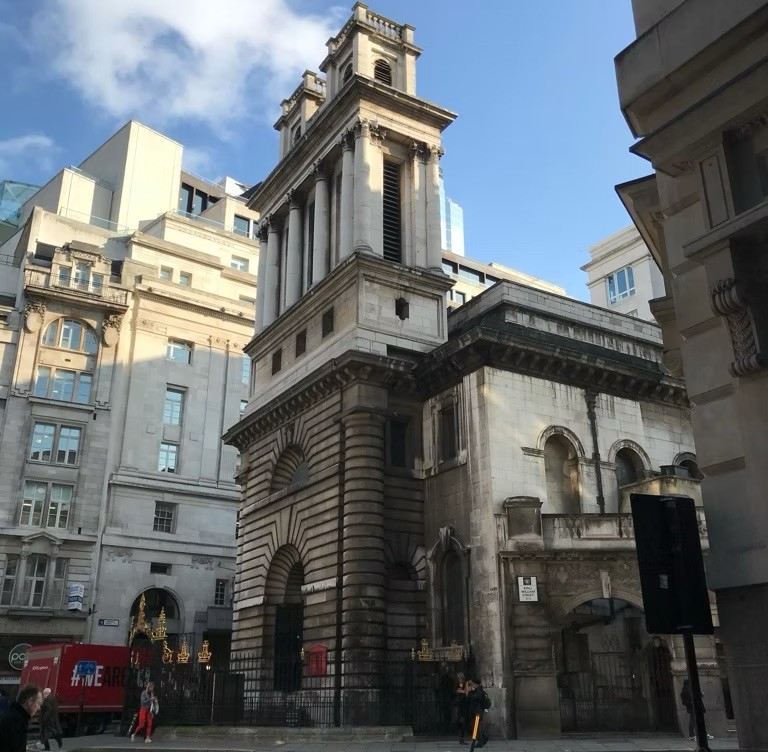
A church on this site was first recorded in 1273, although excavations of c1716 uncovered remains thought to be Roman, and there is evidence of major Roman buildings in the immediate vicinity. The church was rebuilt in 1442 and then repaired by Sir Christopher Wren in 1670-7, having been damaged in the Great Fire of London. The church was rebuilt again by Nicholas Hawksmoor in 1716-17 as one of Queen Anne’s 50 new churches, and this is the building as it currently stands. St Mary Woolnoth is Hawksmoor's only City of London church. The Bank tube station was built underneath the church in 1897-1900.
From 1780 to 1807 the rector of St Mary Woolnoth was John Newton (1725-1807). Formerly a captain of slave ships, Newton’s conversion to Christianity led to him becoming an Anglican minister and eventually a prominent abolitionist. Newton lived to see Britain's abolition of the African slave trade in 1807, just before his death. A memorial tablet on the north wall bears an epitaph written by Newton himself, which begins: 'John Newton, Clerk. Once an infidel and libertine, a servant of slaves in Africa, was, by the rich mercy of our Lord and Saviour Jesus Christ, preserved, restored, pardoned, and appointed to preach the faith he had long laboured to destroy.'
st edmund, king & Martyr
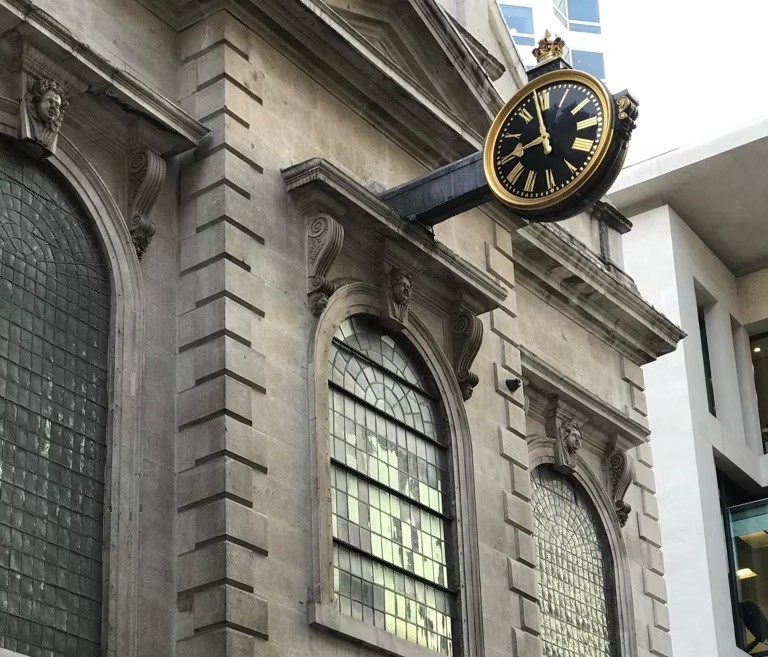
The present church, a Grade 1 listed building, has been attributed to Sir Christopher Wren and Robert Hooke, and was built in 1670-79 on the site of a former medieval church. This medieval church is believed to have been located on the western edge of a Roman Basilica and it is therefore likely that there are significant Roman archaeological remains below ground. In 1710 the current spire was added, a much taller construction compared with the original tower that had a domed lantern above.
The building underwent significant alterations in the following centuries, including the modifying of windows, and the vestry has been re-built on several occasions, with the latest structure dating from 1968 under the direction of Rodney Tatchell. There was also extensive internal alteration in 1864 by William Butterfield and the roof was completely renewed following war damage in World War 1. Originally a central chandelier hung from the roof, but this was replaced by the current central roof lantern in the nave.
ST CLEMENT EASTCHEAP
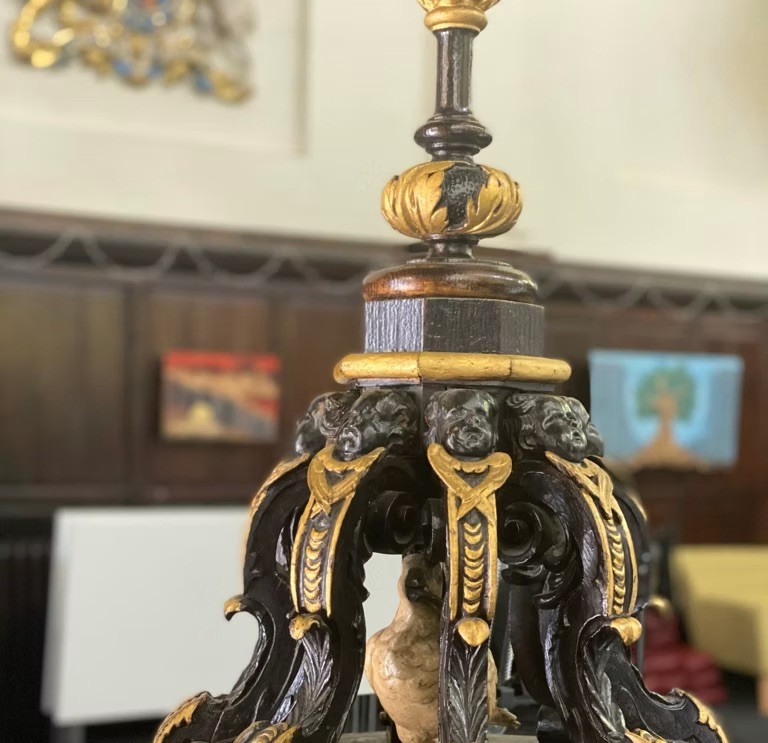
There has likely been a church at St Clement Eastcheap, located in Candlewick Ward, from at least the eleventh century, probably earlier, and the first reference to the church is found in a deed written in the reign of Henry III (1207–72), which mentions 'St Clement Candlewickstrate'. The church was destroyed in the Great Fire of London of 1666 and its rebuilding has been attributed to Sir Christopher Wren between 1683 and 1687. This seems to be confirmed by the parish account for 1685, which contains the following item: to one third of a hogshead of wine, given to Sir Christopher Wren, £4 2s.
Wren's original design, which was unusually simple, was altered by Sir William Butterfield in the late nineteenth century. Butterfield removed Wren's galleries as well as replacing the clear glass windows with stained glass. The reredos was split into three sections and polychrome tiles were installed. Then in 1932-34 the church was altered again when Sir Ninian Comper rebuilt the reredos in its original style, painting it in bright blues and gold.
The church only suffered minor bombing damage during the Second World War, so the current building remains in essence close to the original Wren construction. The famous nursery rhyme, 'Oranges and Lemons' celebrates the ‘bells of St Clements’, in the line 'Oranges and lemons say the bells of St Clements'. However, St Clement Danes, another Wren church on Fleet Street, also claims to be the church mentioned in the rhyme. It is possible that the name refers to neither church, but was in fact used because 'St Clement's' rhymes with 'lemons'.
the abolitionist movement
On 22 May 1787 twelve men met in the upper room of a Quaker print shop in George Yard, just off Lombard Street to calculate how to bring down the slave trade. The group known as’ The Society for Effecting the Abolition of the Slave Trade’ was led by Thomas Clarkson, the 27 year old son of a vicar and other prominent campaigners including Granville Sharpe and William Wilberforce - nine were Quakers, including one American; three were Anglicans.
Clarkson had come to abolitionist views at Cambridge University while researching and concluded that in order to bring about any change, ordinary people needed to learn of the true scale of the suffering which commerce in human cargo caused.
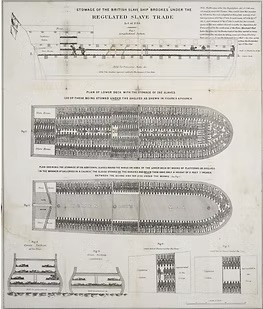
It was an art image -- a diagram of the slave ship “Brooke” -- which eventually helped to awaken the public to the barbarity of the slave trade. The diagram instructed the crew of the ship in loading ‘cargo’ so as to maximise space and profit. The image showed the decks loaded with 454 slaves, the maximum ‘legal’ limit although it was known that the same ship had carried more than 700 at a time to maximize profit. This shocking image of men and women packed side by side and the effect of imagining the airless decks running with blood pus and human waste spoke clearly of the horror of the ships.
When Clarkson received the diagram via former slave turned abolitionist Olaudah Equiano, he promptly printed 7000 copies in James Philips’ print shop in Lombard Street and by the end of 1788 the Brooke’s diagram was displayed in homes, businesses and reproduced in newspapers all over Britain.
The impact of this torpedo shaped diagram for the cause of abolition was incalculable. The Brooke’s poster remains one of the most widely reproduced graphics of all time, and it helped to revolutionize modern advocacy. In 2012, the Brooke’s Diagram was listed in Scott Christianson’s 100 Diagrams that Changed the World. Even Clarkson was surprised at its effectiveness. He wrote: ‘It made an instantaneous impression of horror on all who saw it.’[i]
St Mary Woolnoth, Lombard Street
In the same year as the Brooke’s diagram was being printed, down the street at St Mary Woolnoth, the Rector, John Newton published his pamphlet, 'Thoughts upon the African Slave Trade'. In his pamphlet Newton revealed his own past as a slave trader, condemning the trade, and expressing regret at his part in it. Later that year he was called as a witness by the parliamentary select committee for examining the slave trade. With his first-hand experience he provided detailed evidence of the conditions and treatment to which men and women were subjected. His experience, position and reputation as a clergyman, made his contribution to the success of the abolition movement extremely valuable.
The other key contribution to the abolitionist movement that happened ion Lombard Street was the meetings between William Wilberforce and John Newton at St Mary Woolnoth. In 1785 - 6 William Wilberforce, the English member of parliament approached Newton for advice and Newton acted as a mentor and encouraged him to use political means to do God's work. In Wilberforce's case, this would prove to be the campaign for abolition.
In the last days of Newton’s life his mobility, eyesight and even his memory deserted him. He said that he remembered two things: “That I am a great sinner and that Christ is a great saviour.”
John Newton died in December 1807, shortly after the Abolition Act passed into law. He was buried beside his wife in the crypt of St Mary Woolnoth, but the building of the Underground station at Bank led to both bodies being re-interred at Olney in 1893.
Abolitionist movement timeline
1785-6 William Wilberforce asks for advice from John Newton in the midst of his evangelical conversion and joins the abolitionist movement.
1787 First meeting of The Society for Effecting the Abolition of the Slave Trade at James Philips’ print shop in George Yard, Lombard Street
1788 Newton revealed his slave trading past in ‘Thoughts upon the African Slave Trade’
1788 Brooke slave ship diagram printed at the Philips’ print shop in George Yard, 7000 distributed
1807 Abolition of the Slave Trade Act 1807 entered statute books, making the slave trade illegal
1833 Slavery Abolition Act 1833 gave freedom to all slaves in the British empire
JOHN NEWTON AND
AMAZING GRACE
Born in Wapping in 1725 the son of a master mariner, John Newton spent the first part of his career as a slave trader. From 1745 -1754 he worked on slave ships, serving as Captain on three voyages.
In 1748 Newton was dramatically converted on one of these voyages during a violent storm when he called on God for mercy. Following his conversion, he became “surveyor of tides” in Liverpool and began theological study but it wasn’t until later in life, however, that he came to see clearly how wrong the slave trade was. Newton wrote: "I hope it will always be a subject of humiliating reflection to me . . . that I was once an active instrument in a business at which my heart now shudders."
In 1780 Newton became Rector of St Mary Woolnoth a position he would hold for 27 years until 1807. It was during this period that his own story of personal redemption, God’s grace and the beginnings of the abolitionist movement were drawn together.
The hymn ‘Amazing Grace’ was written during his time as curate at Olney Church in Buckinghamshire and was first introduced by Newton in his New Year’s Day Sermon on 1 January 1773. Newton’s hymn “Amazing Grace” is likely to be the most widely sung hymn in the world speaking of the gospel message of redemption and hope, it is sung often by Christians and is an anthem for the world.
At a service to mark the 225th Anniversary of the first meeting of The Society for Effecting the Abolition of the Slave Trade at St Mary Woolnoth, it was noted that ‘that the authenticity of the emotion expressed, the posture of God of complete dependence . . . seems to touch a chord with people everywhere’.
The song has become a resistance song. It was sung before Martin Luther King’s “I have a Dream” speech. It was sung when Nelson Mandela was freed. It was sung when the Berlin Wall came down.’
Also noted at that service was a reminder that the words of ‘Amazing Grace’ speaking of Newton’s own faith journey are an inspiration to all in Christian ministry. What was said then is equally true today, ‘that we cannot create programs that outrun the personal authenticity of our relationships with neighbours and ultimately our relationships with God.’
In the last days of Newton’s life his mobility, eyesight and even his memory deserted him. He said that he remembered two things: “That I am a great sinner and that Christ is a great saviour.”
Amazing Grace, how sweet the sound
That saved a wretch like me
I once was lost, but now am found
Was blind but now I see
Was Grace that taught my heart to fear
And Grace, my fears relieved
How precious did that Grace appear
The hour I first believed
Through many dangers, toils and snares
We have already come
T'was Grace that brought us safe thus far
And Grace will lead us home
And Grace will lead us home
Amazing Grace, how sweet the sound
That saved a wretch like me
I once was lost but now am found
Was blind but now I see
Was blind, but now I see
Over the years there have been times when the willingness of churches to challenge the City has been muted and they have gone with the flow rather than stepping up as a voice at the intersection of trade and finance. One of those failures was speaking up on the slave trade which was allowed to go unchallenged by many for centuries. But that all changed in the late 18th century and Lombard Street played several key roles in bringing the trade to an end in Britain. Two Lombard Street locations stand out: George Yard and St Mary Woolnoth.